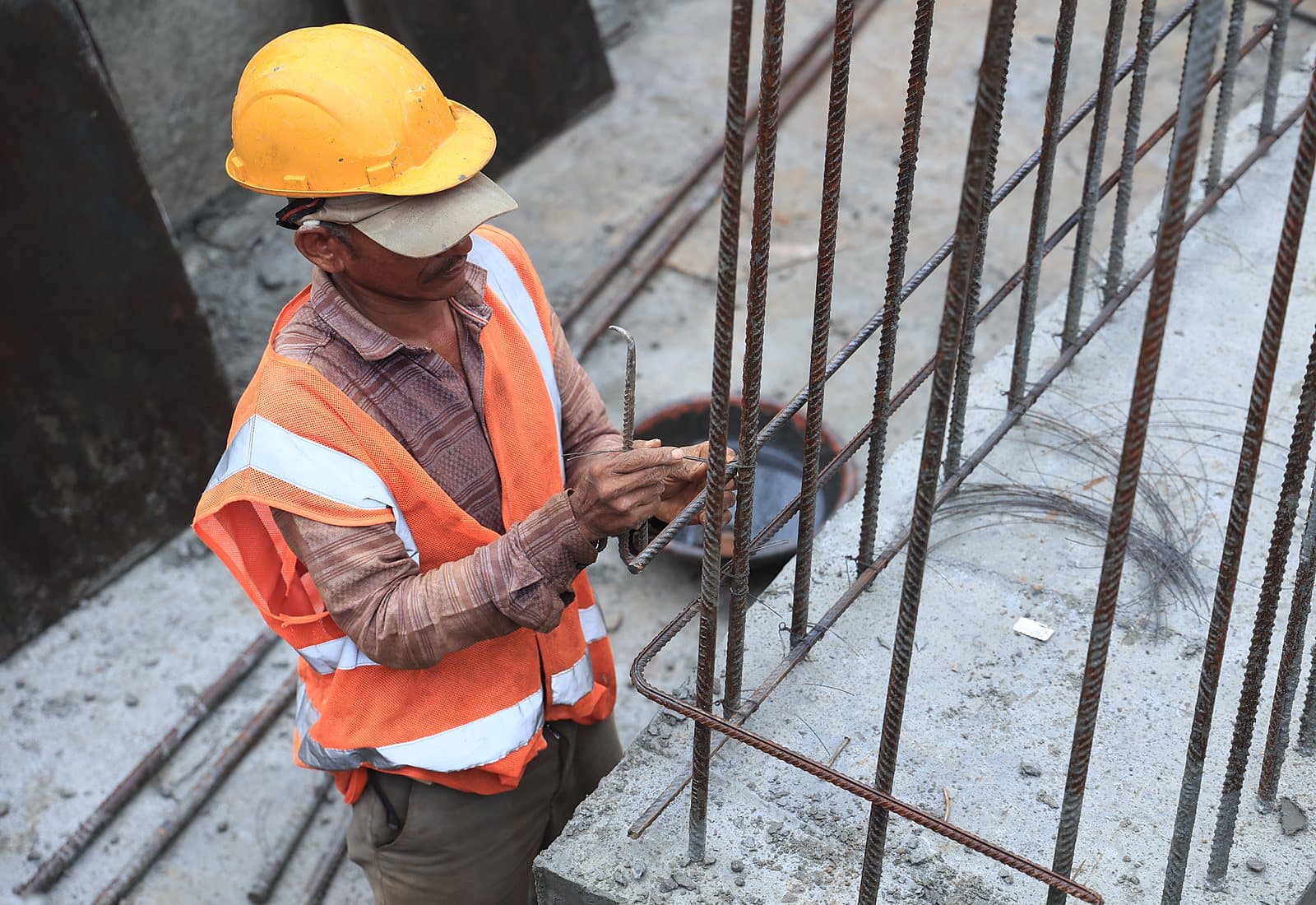

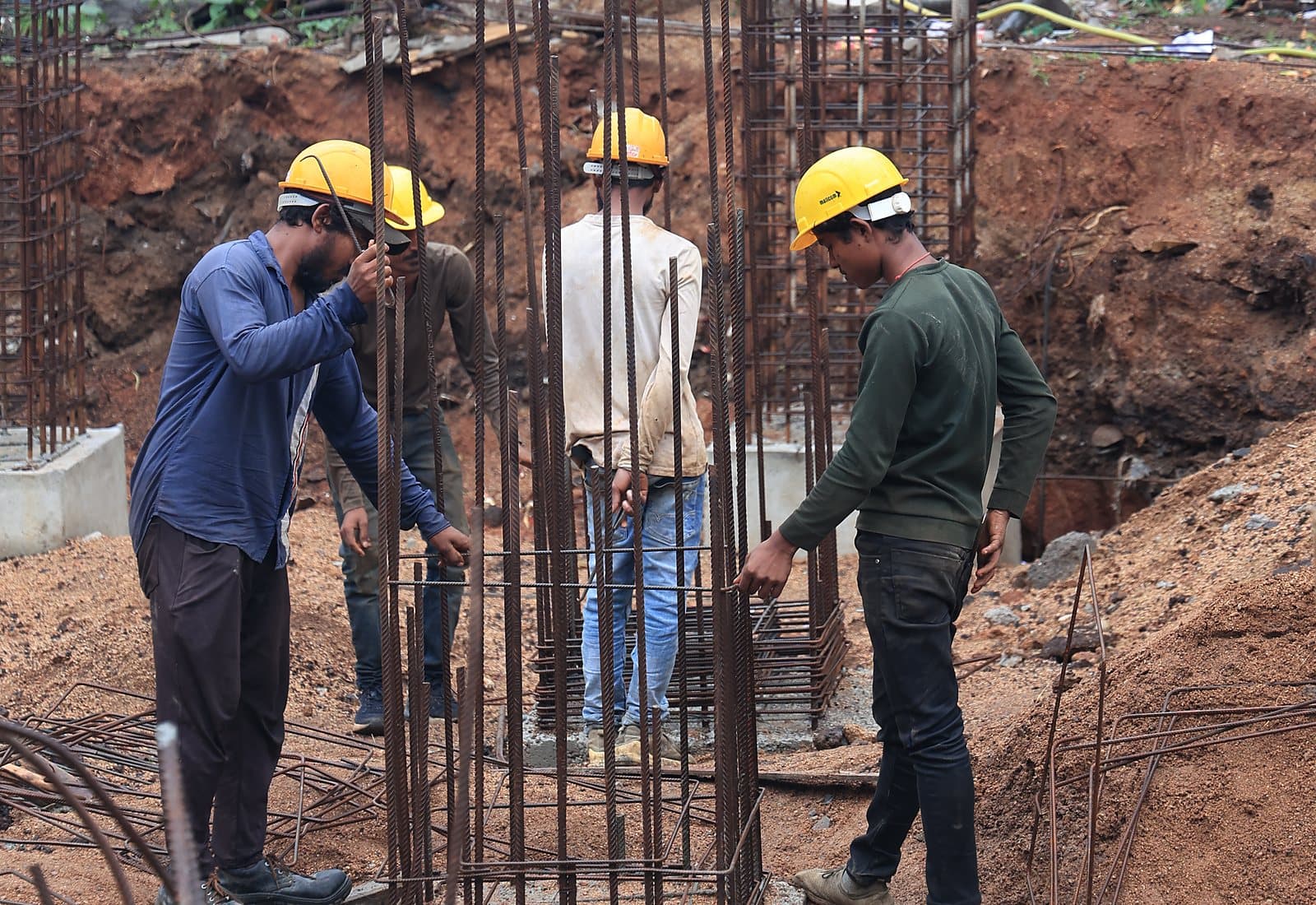
On a conventional site, reinforcement arrives as 12 metre bars and is cut and bent in a yard next to the structure. Cut and bend moves that work to the mill. The bars arrive already shaped, labelled and in the order you will fix them.
What we need from you
Everything starts with the bar bending schedule (BBS): the list of every bar in each member, with its diameter, shape, dimensions and quantity. We accept it as a spreadsheet or as drawings.
Along with the schedule, tell us:
- The grade. Cut and bend is bent from Fe 550D to IS 1786:2008.
- The bending code or standard the schedule is drawn to.
- The pour sequence, so we can group bars by member and by pour.
- The delivery address, access restrictions and the dates each pour is planned.
What comes back
- Tagged bundles. Each bundle is labelled with the member and bar mark from your schedule, so the fixing gang does not have to measure or sort.
- Delivery in sequence. Bars for the next pour arrive before that pour, not all at once.
- Heat-wise test certificates, the same as for straight bars.
Why sites switch
- No bending yard to set up, staff or secure.
- Less off-cut waste, because cutting is planned across the whole schedule rather than bar by bar.
- Fewer errors in shape and length, because bending is machine-controlled.
- Faster fixing on congested sites such as metro viaducts and city flyovers, where there is no room to bend.
Getting started
Send the schedule to the sales desk through the enquiry form. We will check it, confirm the quantities and agree a delivery plan against your pour programme.